

Choosing the Right Wolf Cooking Setup for Your Kitchen
You are building or renovating your kitchen. The refrigeration decision is settled. Cabinetry is finalized. Now you face the question that will determine how you cook for the next 20 years: gas, induction, or dual fuel?
This is not a matter of preference. It is a matter of matching cooking technology to how you actually work in the kitchen. Get it right, and cooking becomes intuitive. Get it wrong, and you will spend years adapting to a range that fights you at every step.
Here is how to decide – with real clarity about what each Wolf cooking system does, who it serves best, and what trade-offs you are actually making.

Dual Fuel: The Professional Standard (And Why It Costs More)
A dual fuel range combines gas burners on top with an electric convection oven below. This is not a compromise. It is the configuration professional kitchens use when performance matters more than cost.
Wolf’s dual fuel ranges feature dual-stacked, sealed burners on the rangetop. Each burner has two tiers of flame ports – one for high heat, one for low. At full power, you get up to 16 MJ of searing heat capable of charring meat or bringing large pots to a rolling boil in minutes. Turn the knob down, and the same burner delivers a whisper of flame gentle enough to melt chocolate or hold a stock at bare simmer without scorching.
Below, the electric oven uses Wolf’s Dual VertiFlow convection system – two fans, two heating elements, independent control over airflow and heat distribution. This is not standard convection. This is the system that produces even baking across multiple racks simultaneously, consistent roasting without hot spots, and temperature accuracy within half a degree.
The oven also includes Gourmet Mode, which automates nearly 50 chef-tested cooking processes. You select the dish – roast chicken, chocolate soufflé, slow-cooked lamb shoulder – and the oven manages temperature, convection settings, and timing automatically. This is not for beginners. This is for people who want precision without babysitting.
Who dual fuel is for: People who cook multiple dishes simultaneously. People who bake seriously and need reliable oven performance. Families where one person makes breakfast while another preps dinner. Kitchens that host large gatherings where timing across six burners and two oven racks matters.
What you gain: Instant visual feedback from gas flames. Immediate temperature response (gas adjusts faster than any other fuel). Superior oven performance for baking, roasting, and multi-rack cooking.
What you give up: Higher installation cost (gas line to the kitchen, electrical for the oven). More complex service if something fails. Slight learning curve if you have never cooked on gas.
Induction: Faster, Cleaner, Misunderstood
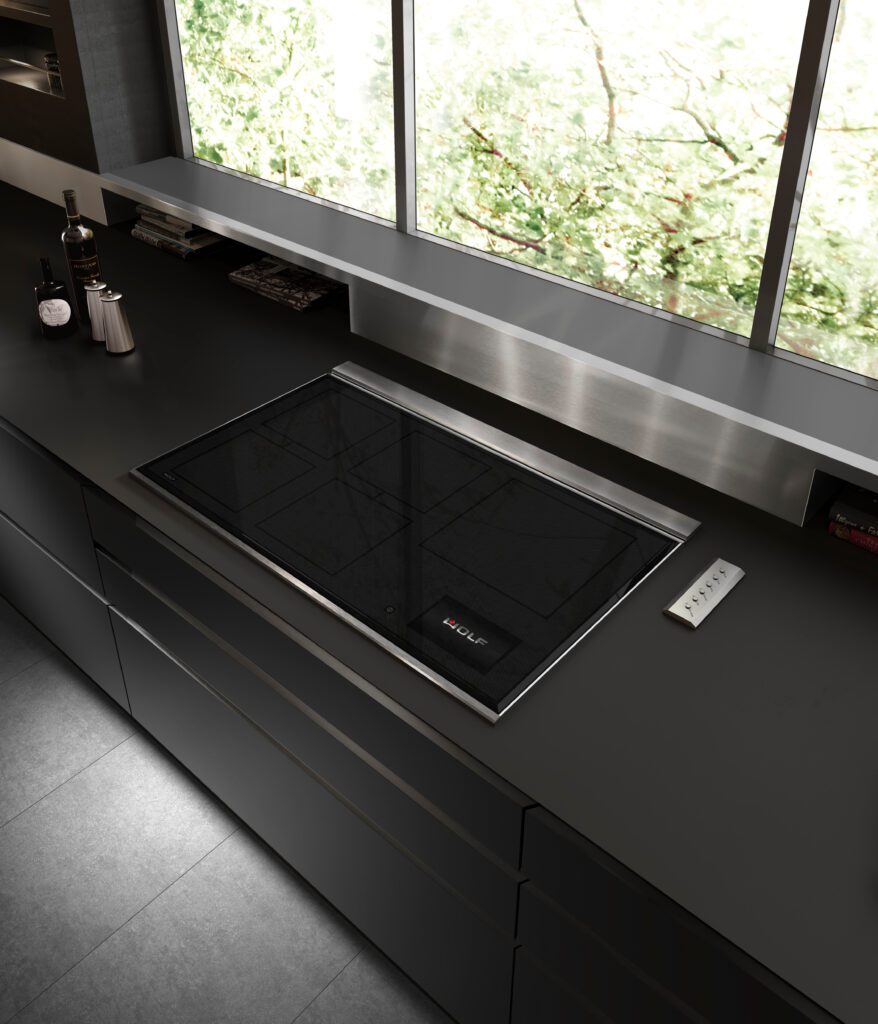
Induction cooking uses electromagnetic fields to heat cookware directly, bypassing the cooktop surface entirely. The cooktop itself stays cool. The pan gets hot. This is not a gimmick. It is faster than gas and cleaner than any other cooking method.
Wolf’s induction range delivers power that rivals gas – with 40% faster boil times and near-instantaneous temperature adjustment. Turn a burner from high to low, and the response is immediate, not gradual. This makes techniques like deglazing or reducing sauces trivially easy. You have the control you would expect from gas, but with speed gas cannot match.
The cooktop features Bridge functionality, which joins two induction zones into one large area for griddles, fish poachers, or oversized roasting pans. Boost Mode delivers rapid heat for those moments when you need water boiling now, not in five minutes. And because the surface never gets as hot as gas or traditional electric, cleanup is as simple as wiping down glass.
Below, the same Dual VertiFlow convection oven from the dual fuel range. Same Gourmet Mode. Same multi-rack reliability. The only difference is what happens on top.
The cookware question: Induction requires magnetic cookware – cast iron, enameled cast iron, and stainless steel with magnetic bases. Aluminum, copper, and non-magnetic stainless will not work unless they have an induction-compatible layer. If your cookware collection is heavily invested in non-magnetic materials, this matters. If you are starting fresh or already use induction-compatible pans, it does not.
Who induction is for: People who value speed and precision. Households with young children (the cooktop stays cool, reducing burn risk). Anyone renovating without easy access to a gas line. Cooks who hate cleaning stovetops.
What you gain: Fastest boil times of any cooking method. Precise, instant temperature control. Cooler kitchen (induction generates less ambient heat than gas). Easiest cleaning.
What you give up: Visual flame feedback. Cookware flexibility (must use magnetic pans). Slight adjustment period if you are used to cooking on gas.
Gas Rangetop with Separate Oven: Maximum Flexibility, Maximum Cost
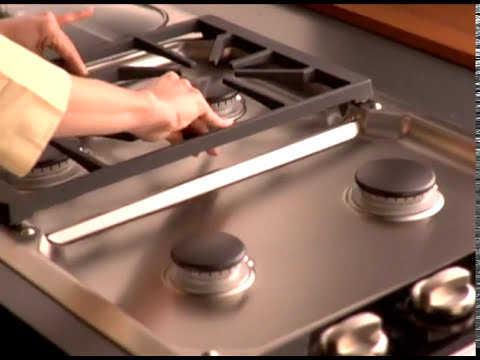
A sealed burner gas rangetop paired with separate built-in ovens is the configuration you see in professional kitchens and high-end residential setups. It is not a range. It is a modular cooking system.
Wolf’s sealed burner rangetops come in 91cm and 122cm widths, with configurations that include standard burners, infrared teppanyaki (griddle), infrared chargrill, and high-output wok burners. The same dual-stacked burner technology as the dual fuel range, but with more layout options and the ability to position the rangetop separately from oven placement.
Pair this with Wolf’s E Series or M Series convection ovens – or better, a convection steam oven – and you have independent control over every element of your cooking system. One oven for baking. Another for roasting. A third for steam or speed cooking. The rangetop handles stovetop work without fighting for space.
Who this is for: Serious home cooks who need maximum capacity and flexibility. Households that entertain frequently and cook multiple dishes simultaneously. People building custom kitchens where layout and workflow matter more than cost.
What you gain: Complete layout flexibility (rangetop and ovens can be positioned independently). Ability to add specialized ovens (steam, speed, multiple convection units). More cooking capacity than any single range can provide.
What you give up: Higher cost (rangetop plus separate ovens). More complex installation. More kitchen real estate required.
How to Actually Decide
The right answer depends on three variables: how you cook, your kitchen infrastructure, and what you are willing to spend.
Start with infrastructure:
Do you have a gas line to the kitchen? If yes, dual fuel or a gas rangetop becomes simpler. If no, running a new gas line adds significant cost – often ₹1-2 lakhs depending on distance and local regulations. Induction requires only electrical, which most kitchens already have at the right capacity.
Then consider cooking patterns:
If you bake frequently, dual fuel or induction (both use the same electric oven) will serve you better than gas-only setups. If you cook multiple dishes at once and need precise stovetop control, gas (either dual fuel or rangetop) gives you visual feedback and instant adjustment. If speed matters more than tradition, induction wins.
Finally, budget and layout:
A Wolf dual fuel range starts at several lakhs and goes up depending on size and configuration. An induction range costs similarly. A gas rangetop plus separate ovens can easily double that, but gives you flexibility a single range cannot.
What Matters in an Indian Kitchen
Indian cooking places specific demands on cooktops that Western cooking does not. High-heat searing for tandoori-style dishes. Long, low simmers for dal and curries. Frequent use of heavy cookware like kadais and pressure cookers. These are not edge cases. This is everyday cooking.
Gas handles this well. The open flame distributes heat evenly across the curved bottom of a kadai. High-output burners deliver the intense heat needed for proper bhuna or charring. Wolf’s wok burner option (available on select rangetops) is designed specifically for this kind of cooking – delivering 10 kW at the high end and dropping to 1 kW for gentle simmers.
Induction works differently but no less effectively. The electromagnetic field heats the entire base of the pan uniformly, which means even a flat-bottomed kadai gets consistent heat distribution. For pressure cooking, induction’s precise low-end control makes it easier to hold steady pressure without scorching. And the cooler kitchen environment matters more in India, where ambient temperatures already run high.
The real question is whether you want visual flame feedback or faster, cleaner operation. Both work. Neither is wrong.
What People Get Wrong About Each Option
Misconception 1: Induction cannot handle high-heat cooking.
False. Wolf induction delivers power comparable to gas, with faster heat-up times. The limitation is not power. It is cookware compatibility.
Misconception 2: Dual fuel is always better than induction.
Also false. Dual fuel gives you gas on top, which some cooks prefer. But the oven performance is identical to induction ranges (same Dual VertiFlow system). The choice is about the cooktop, not the oven.
Misconception 3: Gas is cheaper to operate than electric.
Sometimes true, sometimes not. In India, this depends heavily on local LPG vs electricity costs, which vary by region. Induction is more energy-efficient (less heat wasted), but whether that translates to lower bills depends on your utility rates.
Misconception 4: You need gas to cook Indian food properly.
Cultural preference, not technical requirement. Indian restaurants overwhelmingly use gas because of cost and tradition. But induction delivers the heat control and power needed for every Indian cooking technique.
The Decision Matrix
Choose dual fuel if:
You have gas infrastructure or are willing to install it. You want visual flame feedback. You bake frequently and need superior oven performance. You cook Indian food that benefits from open-flame techniques.
Choose induction if:
You value speed and precision over tradition. You want the easiest possible cleanup. You are renovating without easy gas access. You have or are willing to invest in induction-compatible cookware.
Choose a gas rangetop with separate ovens if:
You need maximum cooking capacity. You want layout flexibility in a custom kitchen. Budget is less of a constraint than performance and functionality.
All three options are professional-grade. All three will last 20+ years. The question is not which is better. The question is which matches how you cook.
And Wolf offers all three because there is no single right answer for everyone.
| Explore Wolf Cooking
Wolf offers dual fuel ranges, induction ranges, gas rangetops, and built-in ovens in multiple configurations. Professional performance. Decades of reliability. Built for kitchens where cooking matters. View the full Wolf cooking range → subzero-wolf.co.in/cooking-products/ |


