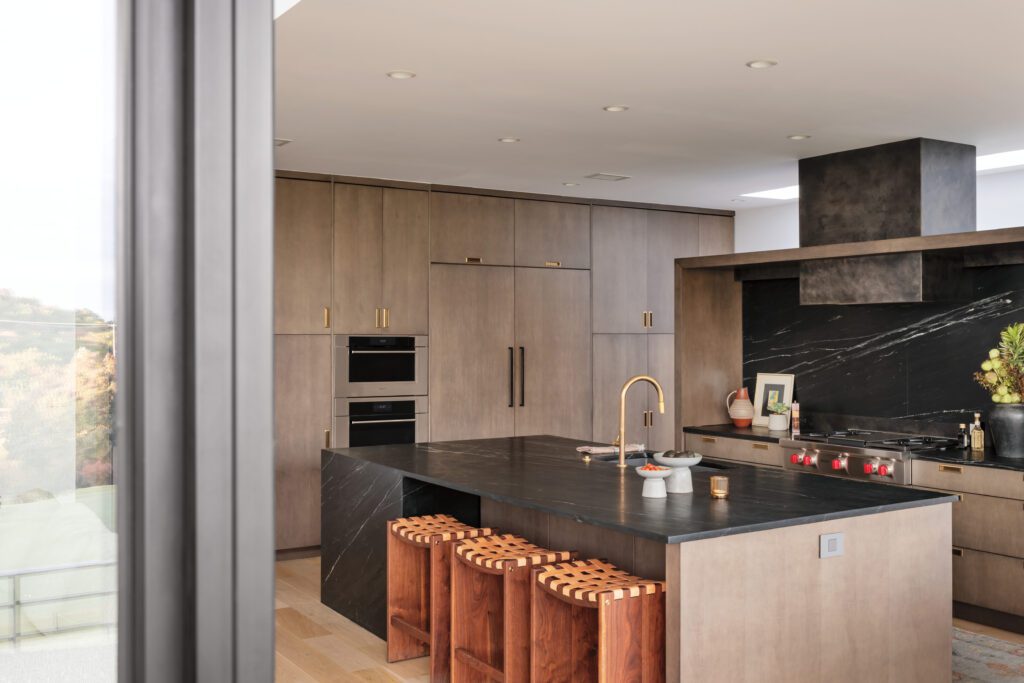
Introduction
One of the most important early decisions in a Sub-Zero Wolf kitchen is the choice between standard and flush installation. This decision directly affects cabinetry design, spatial planning, and the overall visual language of the kitchen. Making this choice early helps avoid redesign, fabrication delays, and compromised detailing later in the project.
This guide explains the difference between the two installation styles and outlines when each approach is most appropriate.
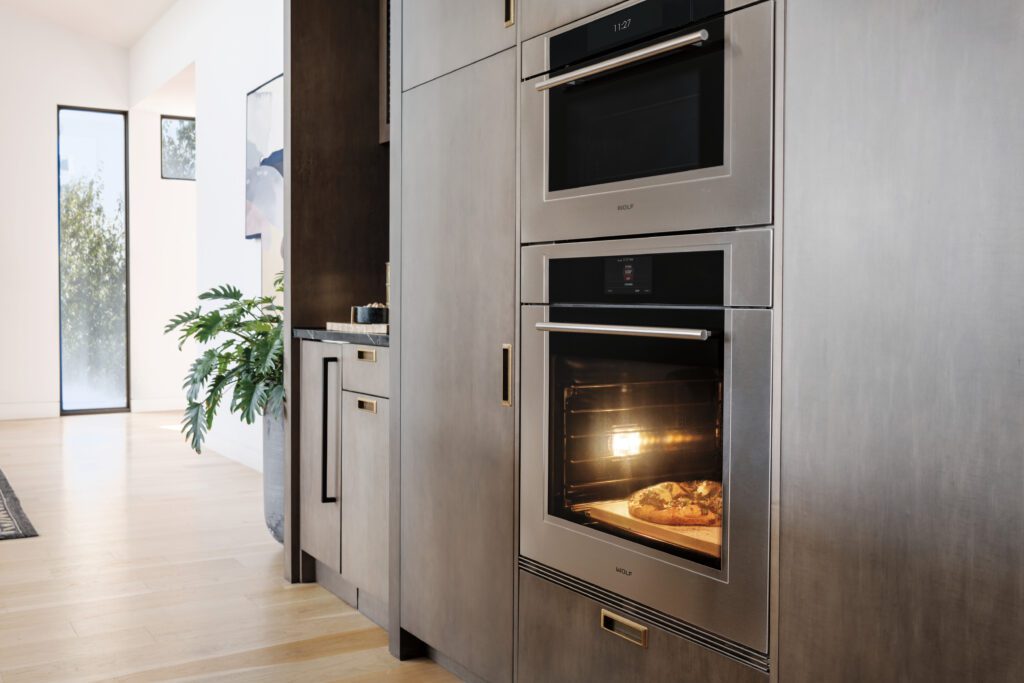
- What Is Standard Installation
In a standard installation, the appliance front projects slightly beyond the surrounding cabinetry.
Key characteristics
• Appliance presence is more pronounced
• Cabinet depth requirements are less complex
• Clear visual separation between appliance and cabinetry
Standard installation is often used when a kitchen design embraces a professional or layered aesthetic.
- What Is Flush Installation
In a flush installation, the appliance aligns closely with adjacent cabinetry for a more integrated appearance.
Key characteristics
• Cleaner, more seamless visual outcome
• Requires precise cabinetry planning
• Tighter tolerances during fabrication and installation
Flush installation is typically chosen for contemporary or minimalist kitchen designs.
- Why This Decision Must Be Made Early
Installation style affects several design and technical elements.
Early decisions influence
• Cabinet depth and construction
• Panel reveals and alignment
• Door swing clearances
• Ventilation placement
• Appliance spacing
Changing installation style after cabinetry drawings are complete often leads to costly revisions.
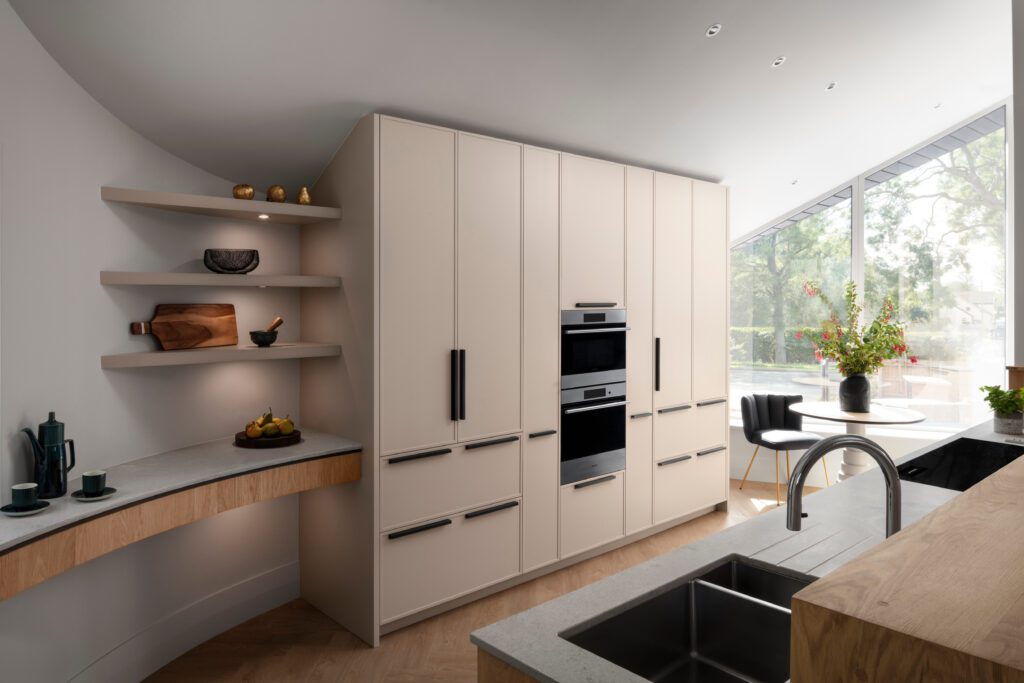
- Visual Impact on the Kitchen
Standard installation creates a stronger appliance statement, which works well in kitchens that celebrate professional detailing.
Flush installation reduces visual interruption and supports calm, continuous surfaces. This approach is often preferred in open-plan homes where the kitchen shares space with living and dining areas.
Neither option is inherently better. The choice should reflect the overall design intent.
- Functional Considerations
Both installation styles support full appliance performance when planned correctly.
Designers should consider
• Traffic flow around appliance doors
• Proximity to prep and cooking zones
• Clearances required for safe and comfortable use
Function should always guide aesthetic decisions.
- Coordination with Cabinetry and Trades
Flush installation, in particular, requires close coordination between:
• Kitchen manufacturers
• Appliance specifications
• Site measurements
• Installation sequencing
Clear documentation and early agreement between stakeholders reduces the risk of on-site adjustments.
Conclusion
Standard and flush installations each serve different design objectives. In a Sub-Zero Wolf kitchen, the correct choice depends on visual intent, spatial planning, and coordination across trades. Deciding early ensures the kitchen delivers both design clarity and long-term usability.